By Brandon Grubbs
How fast can you solve a Rubik’s cube? What’s your best blindfolded time? Most people have no answer to this.
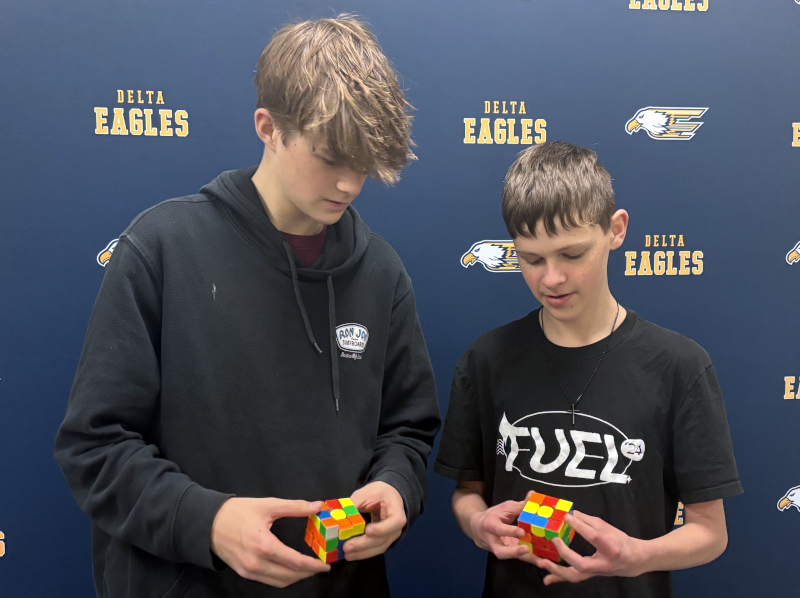
But for two unique kids here at Delta, their answers are much different. From solving a cube in just over 6 seconds to using algorithms to solve it blindfolded, freshmen Graham Hartman and Jonah Swift have a talent for cubing that is more than just a hobby.
Graham and Jonah were both homeschooled in earlier years. At the start of this school year, they brought their education and passions to Delta.
Obviously moving to public school isn’t easy. But bringing their creative hobby to public school has helped them meet people and build new relationships.
They both played high school tennis in the fall, but this did not stop them from keeping up with their routine, habits and cubing practice. They can do special solves together like solving it in just seconds and doing it blindfolded or with one hand. But all these impressive skills came from years of hard work from a young age.
Graham got a cube for his eighth birthday.
He didn’t do much with it until he was about 10. He started doing some research and watched YouTube videos on how to solve his cube for the first time. After success he would scramble it and try to improve his understanding of the cube.
“it was really cool, and I showed everyone I knew! Oh, I saw the music, I saw the music,” he said. “… I thought, hey, that’s pretty cool. I could show anyone I could solve this cube at any time. So I kept doing it and doing it and getting faster and faster.”
He started to learn algorithms, which are patterns that lead to certain strategies toward solving a cube. Each algorithm has a name. When two people memorize algorithms they can use them together for things like blindfolded solving.
Jonah got into cubing when he was 12. He got interested in cubing from Graham.
They lived five minutes apart and were homeschooled at the time, which was the perfect scenario to practice with each other and start learning the basics of how to cube.
In 2022, Graham and his family were on a camping trip in Michigan and there was a cubing competition nearby.
The Hartmans saw it as a great opportunity and gave it a try.
“I did one event and was there for about 10 minutes, but everyone was super nice and just wanted to help me improve,” he said.
To get into a cubing competition you have to sign up online.
This is where you sign up for the events that you want to do. When you enter a competition, you are assigned to a group.
Once your group is called for your event, you will put your cube in a tray. Your cube will be scrambled and then you will do five solves.
If you have fast enough times then you will advance to the next round to do another five solves.
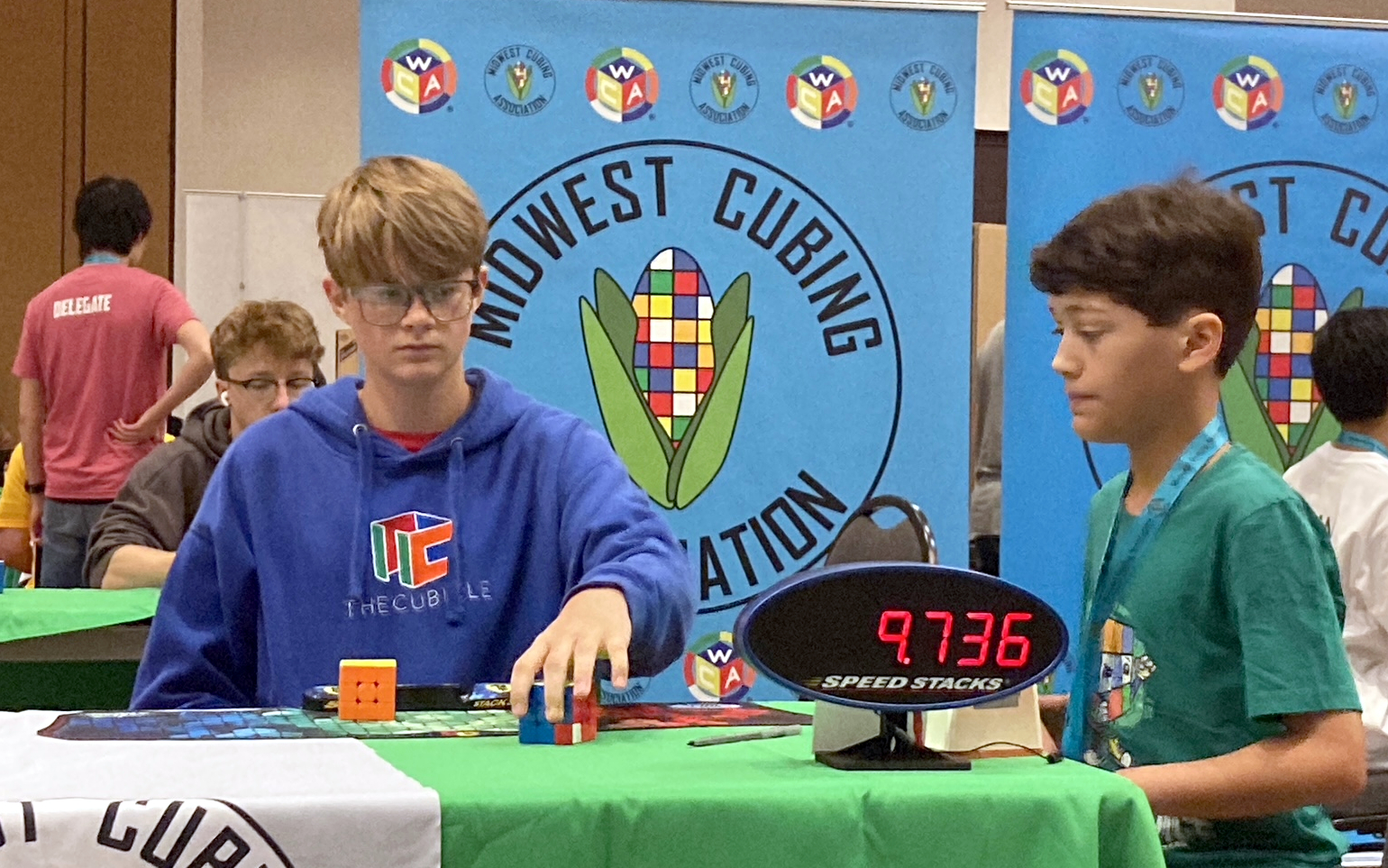
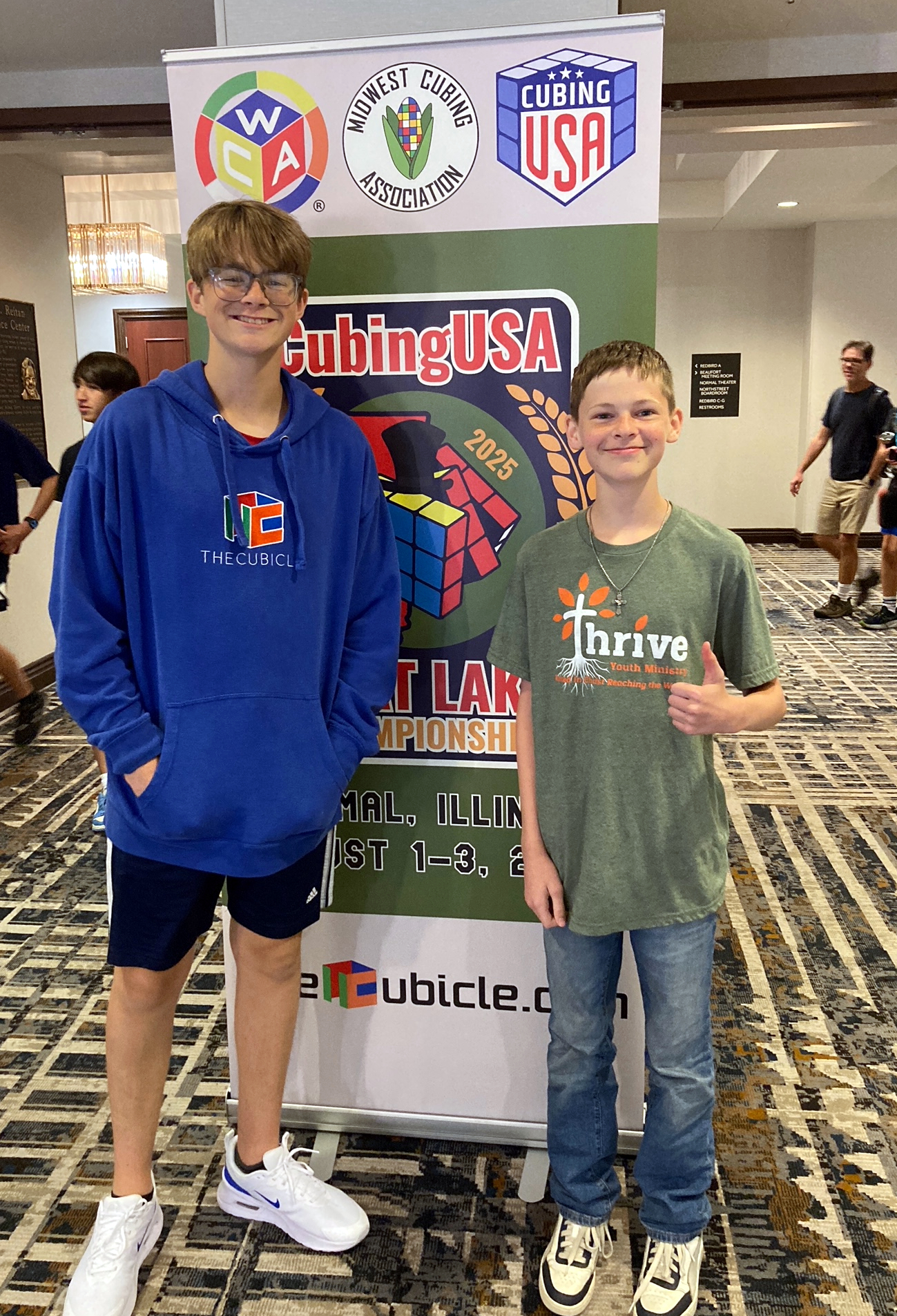
Jonah has also participated in some competitions and has traveled around Indiana and been to competitions up in Michigan, too.
Graham and Jonah often go to competitions together. Competitions are fun to watch, yet stressful to compete.
“Graham is naturally inquisitive, which helps him with the cube,” said Graham’s mom, Shannon Hartman. “He is goal oriented and also loves the challenge of improving his time.”
Similarly, Jonah explains that his love for cubing comes from always working to get better and see his times go down. Jonah’s fastest solve is 7 seconds.
Graham’s fastest solve is 6.03 seconds. Graham’s dad Shane says, “I can do nothing but encourage him. This has always been one of his things, from his first solve. All I have ever done is say things like, “Great job!'”
But there can be lots of mental challenges when it comes to cubing.
For example, Graham and Jonah both have found that going to public school has killed a lot of free time that they would normally spend cubing.
Graham explains that back when he was homeschooled and had a lot more free time he would do upwards of two to four hours of cubing practice each day. Now that he is in public school he does around 1-2 hours a day “if I’m lucky,” he says.
This was a major change in both of their daily routines.
Just like in anything else, with cubing you have good days and bad days.
“For quite a while Graham was improving at every competition and that was very exciting for him,” his mom said, “but then it got to the point where he would have some competitions where he would not always get a personal record.”
She said he had to learn how to accept that and keep working.
“I saw him develop a work ethic that was, never give up,” she said.
Despite facing challenges and setbacks both Graham and Jonah continue to practice their cubing every day and keep on trying to get each other better. There will be hardships but there will also be a rewarding side of it.
Graham is always trying to meet new people at competitions because he knows that everyone is there to help each other get better and nobody is judgmental or impatient.
He believes that the biggest life lesson from cubing is “Don’t be afraid to meet new people.” Meeting new people is what got both Graham and Jonah to the level that they are at now. Cubing is having an impact on growing different personal skills for the boys in their life.
Graham’s dad Shane says, “He has grown so much in his logic skills. … The discipline he has to reach certain goals was certainly developed in a large part due to cubing.”
Graham and Jonah are continuing to work together as they compete and continue their passion.