By Paige Hayes
As high school athletes in many states across the country begin to cash in on their name, image and likeness (NIL), Indiana is one of four remaining states that bars student athletes from receiving money linked to their athletic performance.
According to Indiana High School Athletic Association (IHSAA) Assistant Commissioner Brian Lewis, however, there could be changes on the horizon based on the NIL policies and rules other states have adopted.
“Each state develops its own policy,” Lewis said.
The difference, though, comes in how and when student athletes may be compensated.
“Many states allow an athlete to engage in activities that do not use the school name, logo, facilities, or uniform … but will allow a student to earn money as a social influencer, (which they determine to be) equivalent to a job,” Lewis said.
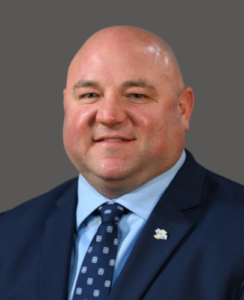
Currently, the IHSAA stands behind its amateurism rule when questions arise regarding NIL. The amateurism rule states that student athletes should participate in high school athletics for the physical, mental and social benefits of competition rather than financial gain.
Furthermore, Indiana high school athletes may not accept payment (directly or indirectly) for athletic participation in that sport, sign a professional contract, or participate in athletic activities held or sponsored by professional athletic organizations during their sports season.
On July 1, 2021, California was the first state to allow NIL for high school athletes on the same day the National Collegiate Athletic Association (NCAA) lifted its ban forbidding college athletes from financially profiting off their athletic promise or performance for a school. Yet, recent court rulings and other legal challenges have loosened the college rules even further, benefiting athletes striving to get the most out of their collegiate experience.
NIL at the high school level typically doesn’t look anything like collegiate NIL. In college, athletes are usually paid through third-party brands, sponsors, or groups of alumni/boosters rather than getting paid directly from the school.
Things can get difficult for young athletes, though, when money gets involved.
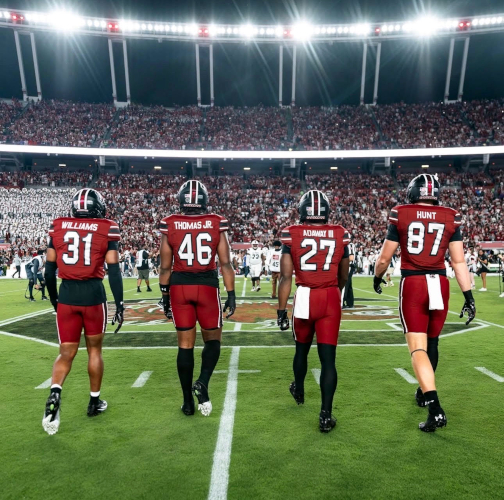
Delta High School graduate Brady Hunt played four seasons of football in high school, followed by an illustrious college career at Ball State University. Currently, Hunt plays tight end for the University of South Carolina Gamecocks.
“I think that NIL or money in general magnifies the person that you are,” Hunt said. “Athletes who are motivated and focused become more motivated with high earning potential in NIL.”
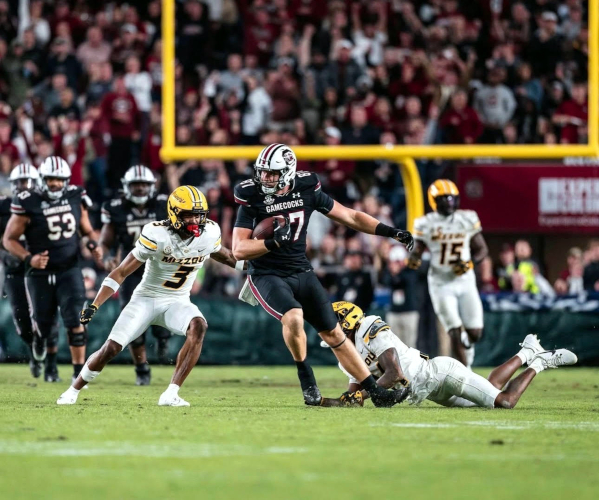
But just as money can be a motivating factor, it can also become a major distraction, especially for high school athletes and programs.
“Just like in college, (NIL) could create imbalance between teams and recruiting/tampering problems, more pressure on young athletes, and shift the focus away from development and enjoyment,” Hunt said.
One of the biggest mistakes made in NIL at the college level is the lack of financial planning and mismanagement of their money. Some athletes don’t realize the type of situation they are in and choose to spend their money rather than save or manage it.
“Because NIL compensation is not directly tied to an employer, things like tax savings and retirement planning are not built in like they are in other occupations,” Hunt said.
Delta athletic director Lynde Bratton said approving a high school NIL policy in Indiana would create a big learning curve for everyone. To learn all the rules, what’s allowed and what’s not allowed, could be a “slippery slope,” depending on what’s included in the policy. And much like Hunt, she worries about how it could change the purpose and intent of high school athletic competition.
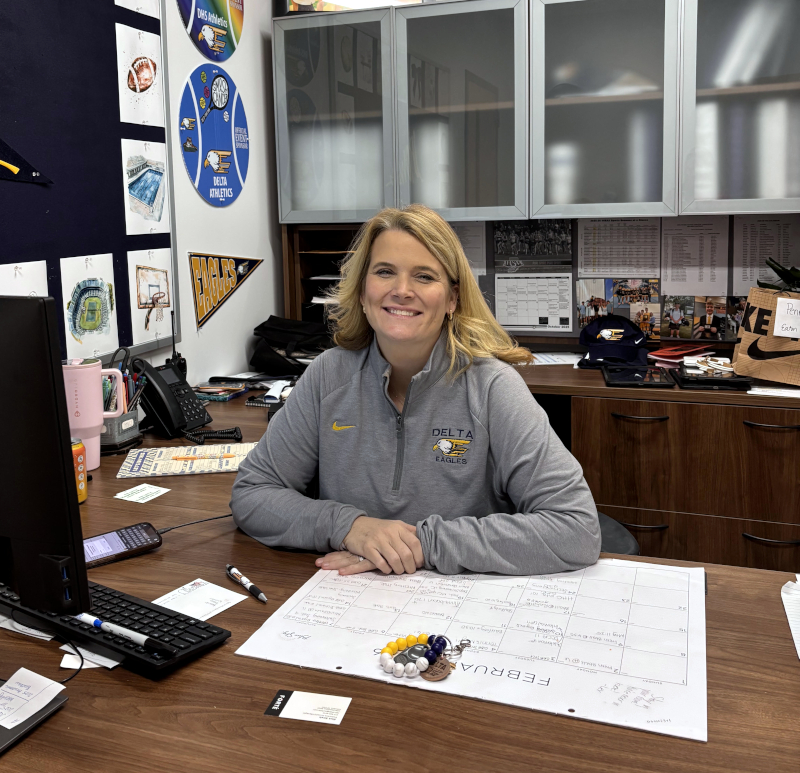
“The biggest concern (I have) is it takes away what high school athletes are about,” Bratton said. “Athletics are about playing with your friends, playing for your school, playing to win a title for Delta or your high school, not for money.”
Delta High School assistant principal and former head football coach Christopher Overholt believes it could lessen high school athletics as we know it.

“High school now has become the last pure place for people to play together, be together, and it’s so genuine,” Overholt said. “Anytime you add money endorsements, things like that, it doesn’t always make things better.”
Lewis said the IHSAA will continue to have discussions about NIL. Currently, there is no timeframe for if, or when, the IHSAA might adopt a new policy. If the IHSAA does eventually approve an NIL policy, it is likely to be similar to its current amateurism rule.
“Any policy that we would develop involving NIL should have no impact on school budgets, because schools would not be allowed to pay students,” Lewis said. “This would not look anything like what is going on in college sports today.”
Hunt said that NIL or money in general magnifies the person that you are. Athletes who are driven and focused become more motivated with high earning potential in NIL.
On the other hand, athletes who lack self-control or are easily distracted can make mistakes with their NIL compensation.
“Making money through sport can certainly motivate someone to work harder or be more focused, but it can quickly become a distraction if the athlete is not intentional about their NIL (earnings),” Hunt said.