By Gabriel Shelton
What if your own legs would break just from standing?
When you break a bone, you probably won’t need a wheelchair — and even if you do end up in one, it won’t likely be for much longer than the injury lasts.
High schoolers rarely have such chronic handicaps. The damage would have to rend one’s skeleton into perpetual disrepair for that, right?
Well, stranger things have happened. An example of one that usually requires a wheelchair has a name: Osteogenesis Imperfecta, more commonly known as brittle bone disease.
It is a noncommunicable disease developed while in the womb that makes one’s bones form defectively, their structure fragile on varying levels.
The femur bones, located in the upper half of the human legs, are the sturdiest bones in a person’s body.
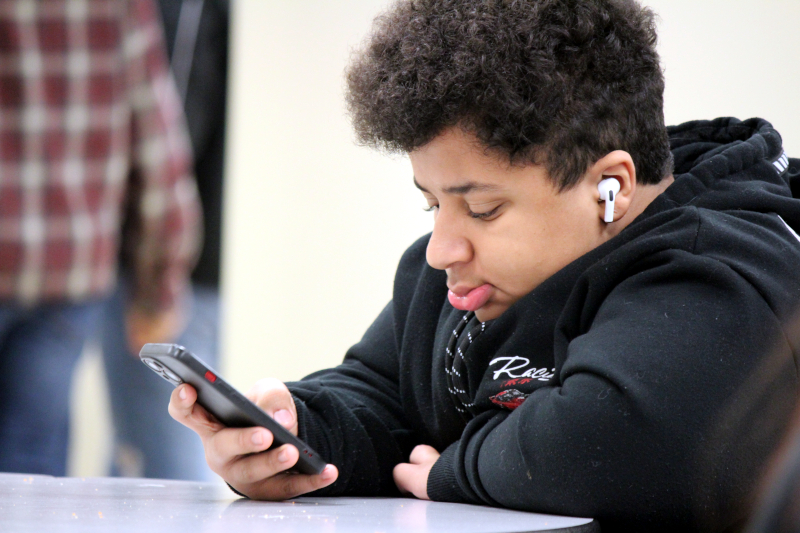
Xzavier Ervin, a junior at Delta High School, cannot walk without his femurs breaking apart. Because of this, he must rely on a wheelchair, the same way he has for all but the first few years of his life.
The nearly 100% mortality rate of type two Osteogenesis Imperfecta — the most fatal type, almost always resulting in death at or before infancy, and the kind he was born with — keeps Xzavier on wheels. They still spin for him, despite those odds.
It was known as soon as two-and-a-half months before he was born that he had things that could be lethally wrong with his body. However, his mom, Katie Stafford, unlike the doctors, did not see this as any reason to end the pregnancy.
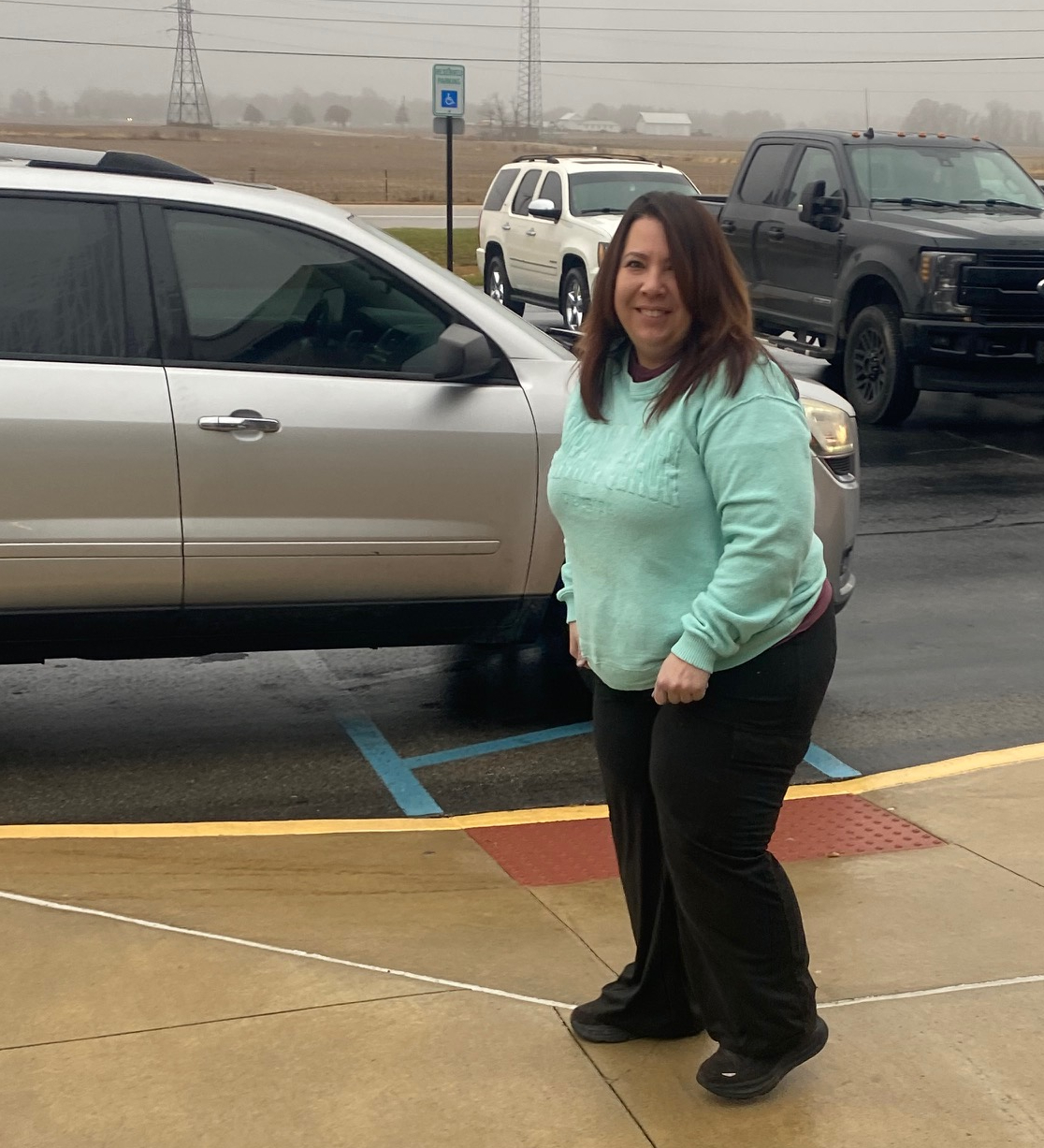
“When I was pregnant with him, at 26 weeks pregnant, they told me to abort the pregnancy because he had a lethal form of dwarfism,” Mrs. Stafford says.
Survival was up to Xzavier, and if he had any chance of making it, she was not about to take it from him. With his skull, arm, and left set of ribs all broken in the process, Xzavier was born at 36 weeks into pregnancy. This is considered pre-term, since pregnancies typically last between 37 and 42 weeks.
He was delivered normally instead of through a C-section since his mom was not the one in danger. He weighed slightly less than five pounds and, from head to toe, was only 15 inches long.
According to Mrs. Stafford, in the years that followed, he was in and out of hospitals, sustaining more injuries. Around six months old, he had a ventilator because the way his ribs were formed made it hard to breathe.
There was a time when the doctors inadvertently broke 22 of his bones just transporting him around the hospital. For the first year of his life, since his skull had been damaged, he could not hear, so the doctors had to make an artificial ear canal that did work.
And when he eventually started kindergarten, Mrs. Stafford recalls that he was around the size of a typical one-year-old and weighed only 18 pounds.
He was expected to die, both at birth with the odds of survival being extremely unlikely, and from everything else that has happened to him since — yet he lived anyway.
He was expected to never walk or even crawl — yet, with a little support, he has done so anyway.
Without his hearing, he was expected to never learn how to talk — yet he speaks anyway.
A blood pressure cuff could break his arm, so going home should have been out of the question, let alone going to school — yet he went to both anyway.
Xzavier has done nothing but exceed all expectations. On top of making it out of the hospital, he does his own chores at home, and he is even working to get his driver’s permit.
“He has two older sisters and they always had his back,” Xzavier’s mom says. “I’ve always pushed him to have independence, so we always try to teach him how to figure things out and how to get things done without always having to ask for help.”
Xzavier’s journey has been challenging, of course, the most obvious obstacles being literal ones: all the things that get in the way of him getting from place to place.
At school, he uses an electric wheelchair, which is bulky but will assist him if he breaks a bone. At home, he uses a manual one, which is smaller but impractical for longer distances.
“My manual wheelchair is just too small,” Xzavier says. “I’ve had it since elementary school, and it displaces my legs so I don’t sit like normal kids.”
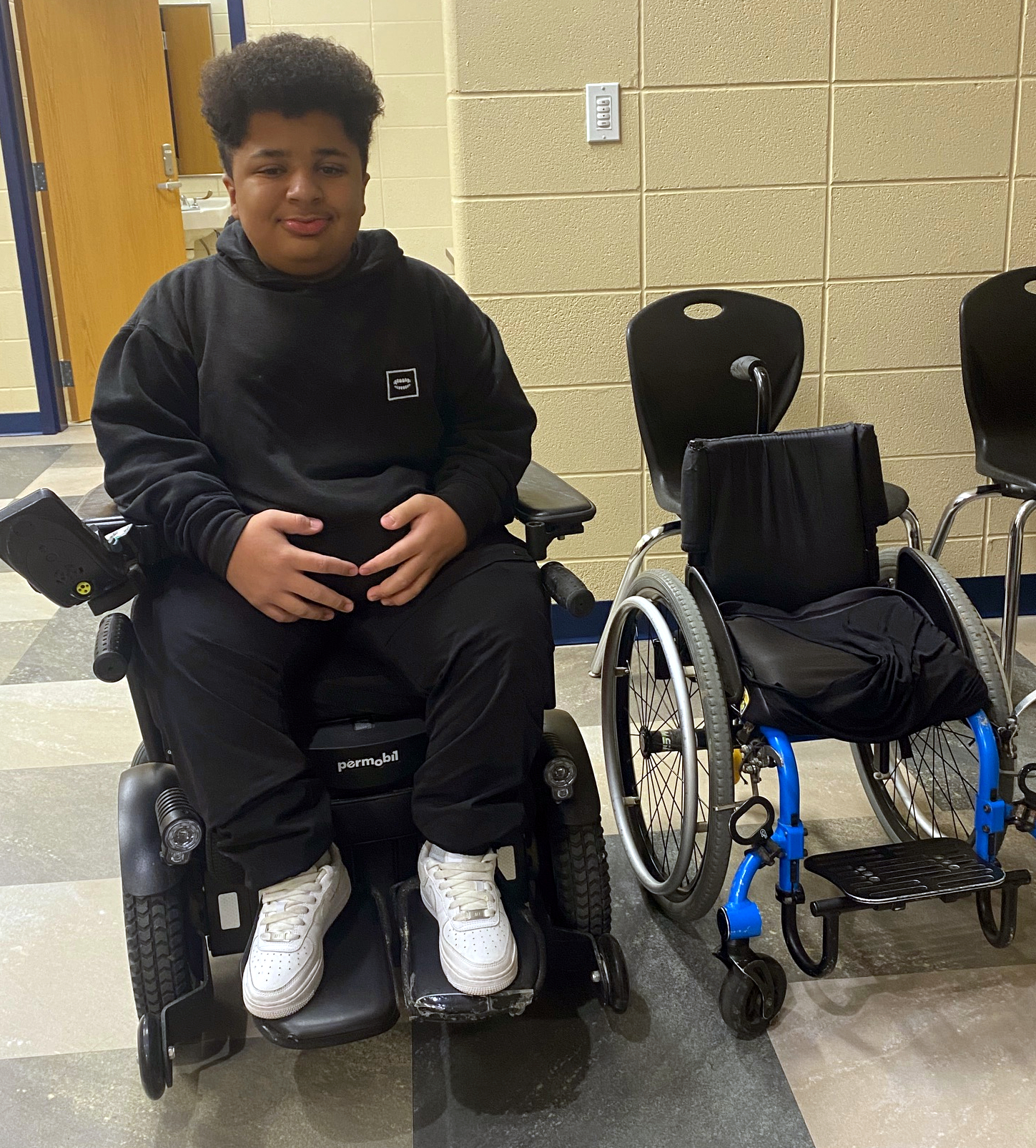
Medicaid paid for his electric one and covers the costs to repair or replace it, but it will not cover the cost of two wheelchairs.
Two tires for the wheels of the electric one alone are around $600. He and his family had to move out of their apartment recently, the owner deciding to make it an AirBNB, so Xzavier now lives further from Delta with a budget too small for either wheelchair. A new manual chair costs $5,200, give or take, but is still too expensive.
Xzavier keeps his chin up, though. Unlike his bones, he himself is one tough cookie to crack. He describes himself as “chill, funny, and hard-working,” and after all he has been through, it is pretty hard to argue with him on that.
Xzavier is a high achiever who regularly tests his limits. He gets good grades and enjoys gaming with friends. What his bones lack in hardness, his moxie makes up for in a quiet strength. Sticks and stones may break his bones, but words? Not so likely. He just needs a better ride.