By Chloe Oliver
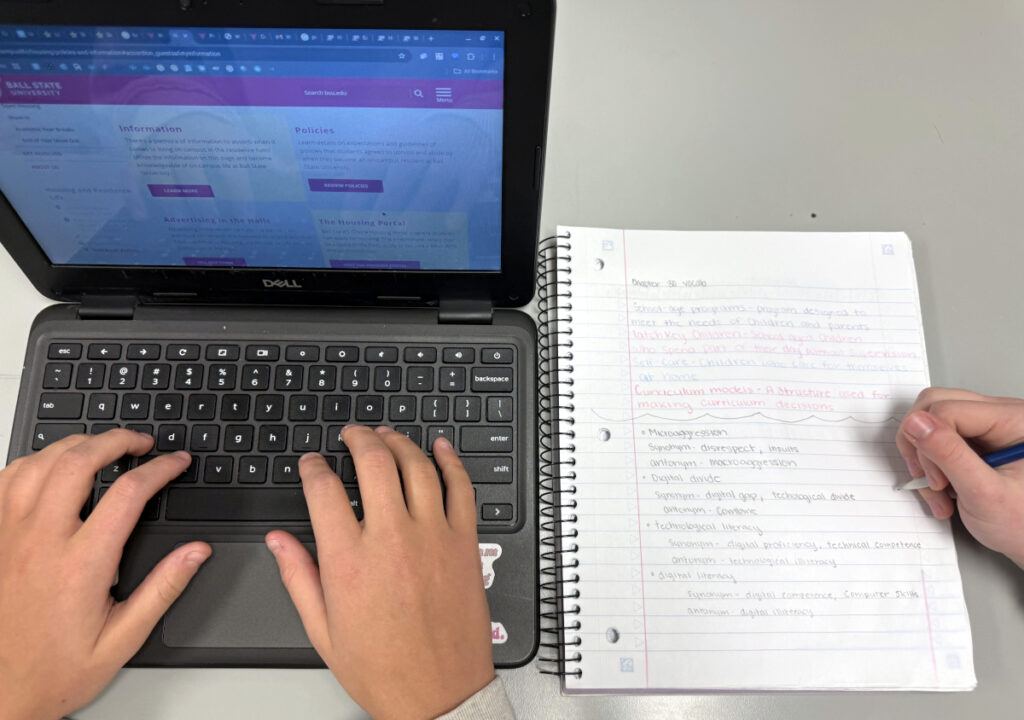
Delta has evolved from just pen and paper, to word processing, to computer labs, to Chromebook carts, and then to a 1:1 student-to-Chromebook ratio. Students have relied on using Chromebooks for years now. This is how some students are used to learning and building their careers.
But now, will paper make a comeback? Which is better for teaching and learning?
Senior Jordan Bunch believes that when it comes to using Chromebooks versus paper, it depends on which one is better for the circumstances.
In her English class, printing off sources is helpful to annotate them and retain the information better.
“I feel like a lot of times when we’re on a Chromebook, we can’t see the entirety of a text,” Bunch said.
She said that when the text is in your hands, you can realize how long the text is and where certain things are located. When you’re on a Chromebook, it is easy to get disoriented and lose your place.
If the school decided to switch to using only Chromebooks, Bunch thinks it wouldn’t help students have a good grasp of all the information they have available, and many students wouldn’t appreciate and realize how big some texts actually are without the physical copy.
“If you only read the digital Bible, you wouldn’t fully understand that it’s 66 books that make up one whole book,” Bunch said. “You would only be able to see a segment of it at a time.”
As a library aide, when students come into the library, Bunch said most of the time it is to assess a Chromebook issue. Other students either need to print out an assignment or to find a quiet place to study.
Bunch says that a pro of having Chromebooks is being able to have all the resources and information at your fingertips. AI is not going away, and she thinks that it is something that should be used correctly, as a tool.
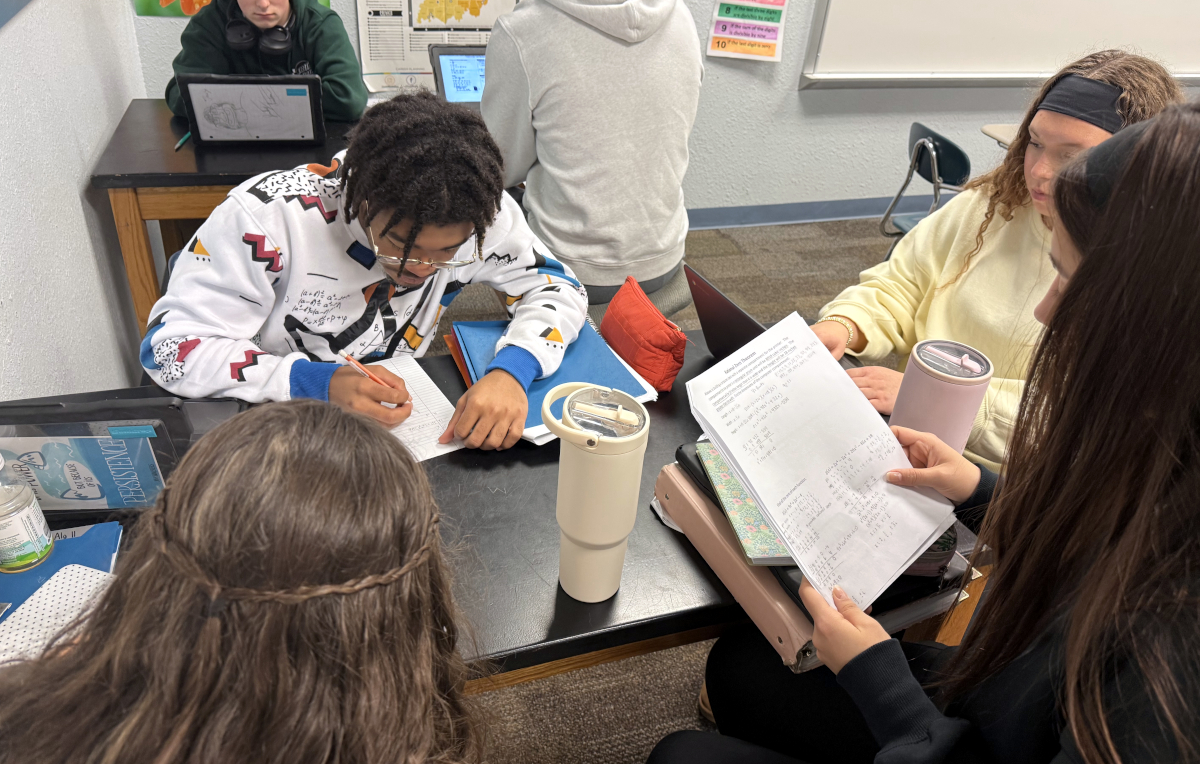
Junior Josey Morris prefers paper when it comes to doing her assignments. She knows that Chromebooks are convenient and thinks that in the future using Chromebooks would be easier.
If we switched to using only Chromebooks, Morris thinks that over time it would become more cost-effective.
“You wouldn’t have to buy paper, print, and all of that stuff,” Morris said. “I think it would be beneficial for e-learning days so we don’t need to keep making up days.”
But Morris, like some other students, gets migraines when staring at a screen for too long as she tries to do assignments.
She is involved in environmental club, which goes around collecting the contents from recycling bins on Thursday mornings. She said that she notices that math classes usually have the most paper because they have mainly paper assignments, as it is difficult to show your work on a Chromebook. Health and English classes are the classes where Morris notices less paper in the recycling bins.
Principal Ms. Joey Gossett thinks that there has been an incline of teachers and students wanting to use paper and pen more often. This could be because of the increased risk of kids using technology such as AI to cheat on assignments.
“I have been through a lot of changes,” Gossett said. “I used to hate change, but since COVID, I have just embraced it.”
In an article on how 2020, the COVID year, shifted the perception of technology in the classroom published by Education Market Association Essentials, the report showed that by the end of December 2020, nearly 9,000 U.S. school districts had 1:1 learning programs. There are only roughly 13,000 districts in the U.S. That is almost 70%.
With that being said, Gossett said that last year was the first year that students at the elementary schools in Delaware Community Schools did not have a 1:1 Chromebook-to-student ratio.
Chromebooks keep librarian Mrs. Miranda Hummel busy. There are many problems that can arise with using Chromebooks, ranging from issues with your Google or Canvas account to issues with the Chromebook itself.
“I think paper works better, because it won’t shut down on you, it doesn’t have trouble loading, there’s no lockdown browser,” Hummel said. “It’s very convenient. Paper always works.”
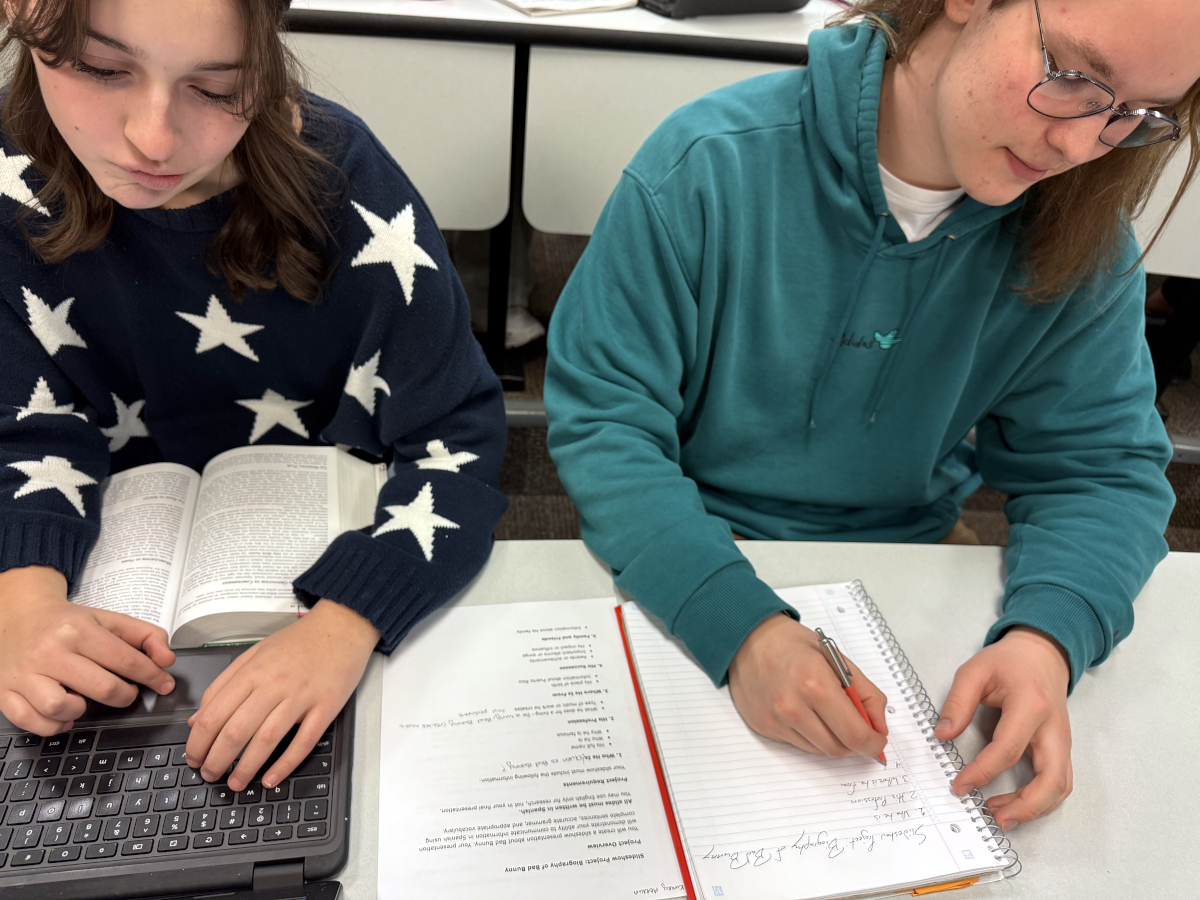
Social studies teacher Miss Zoe Ashcraft prefers paper in her classroom. In her classes, though, the students benefit from using Chromebooks for research. However, Ashcraft is still aware and cautious of Chromebooks being able to pull the students’ attention away from their classwork.
“I think with Chromebooks, one thing we all consider is how much they spend staring at screens at home, whether it’s TV or their phone, and then to force them to stare at a screen at school…. I don’t think that’s good for your eye health.”
When Ashcraft was in high school, she connected better with paper assignments. After COVID happened, the switch to predominantly Chromebooks was tough.
In history teacher Mrs. Julie Blakely’s classes, she finds that using paper works better. For her class, there isn’t an online book.
“I like to see written answers, and I kind of believe the science that if people write things down, they remember more than just looking at a screen,” Blakely said.
When she is grading essays, she finds that it is easier with paper. For Blakely it is easier to grade essays with paper and pen, instead of combing through them on a screen.
“If I’m not just walking around at all times, and looking at every student the whole period, they’re trying to work on other things behind their open screens, or watching basketball,” Blakely said. “It just makes them harder to monitor.”
When the students watch videos in class, Blakely appreciates being able to put the video on Canvas for the people who were absent, or for her students to view later.
According to a 2024 article on the effects of Chromebooks on student engagement published by the International Journal of Technology in Education and Science, a positive side to having Chromebooks in classrooms is students are able to use online resources to create content for their classes. It helps teachers better instruct in certain circumstances.
The same article presents the issues of having Chromebooks in classrooms because of the multitude of technological problems and issues with monitoring the student devices.
“The high school will always be one-to-one,” Gossett said. “Simply because we know at this level where you’re earning credits for your diplomas, there are courses that require research, and there are courses that are dual credit…. They (teachers) might provide the lessons on Canvas.”
When it comes to students retaining information, Gossett believes that paper works better. She said that when putting a pencil to paper and handwriting something, it often helps the brain retain the information better.
“I am more of a book person, so don’t ask me if I have a Kindle, because I don’t,” Gossett said. “I take books with me wherever I go so I can read.”
Over the years, when Gossett oversaw textbook adoption for the high school, she noticed a common consensus: students wanted the hard-bound physical copy of the book.
In Gossett’s experience with teaching English, she found that it works better for students when they handwrite vocabulary, notes, and grammar.
Relying on the Google and Apple calendar helps Gossett stay organized. She is sure to print off anything important, just in case it gets lost or deleted online.
It is unlikely that students will upgrade from their Chromebook devices, unless the school gets a grant to cover costs of pricier electronics like Macbooks, and their maintenance fees.
Effective at the beginning of next school year, teachers’ Dell Latitudes will be replaced with Chromebooks. Teachers will be with the students on Google instead of Microsoft.