By Brandon Grubbs
By 2050, the world population is expected to reach 9.8 billion. This will require a huge increase in world food production for our future farmers.
While it seems like an extremely challenging task, there are students here at Delta already working on huge farm operations to work toward their dream of helping feed the world.
Sophomore Nash Toole works at Coffman Brothers Farms, a 4,000-acre farm operation in Muncie.
To put 4,000 acres in perspective, the size of the entire Delta High school complex is roughly 80 acres.
So the Coffman’s operation is around 50 times the size of Delta’s entire complex. This farm specializes in row crops including corn, soybeans and popcorn.
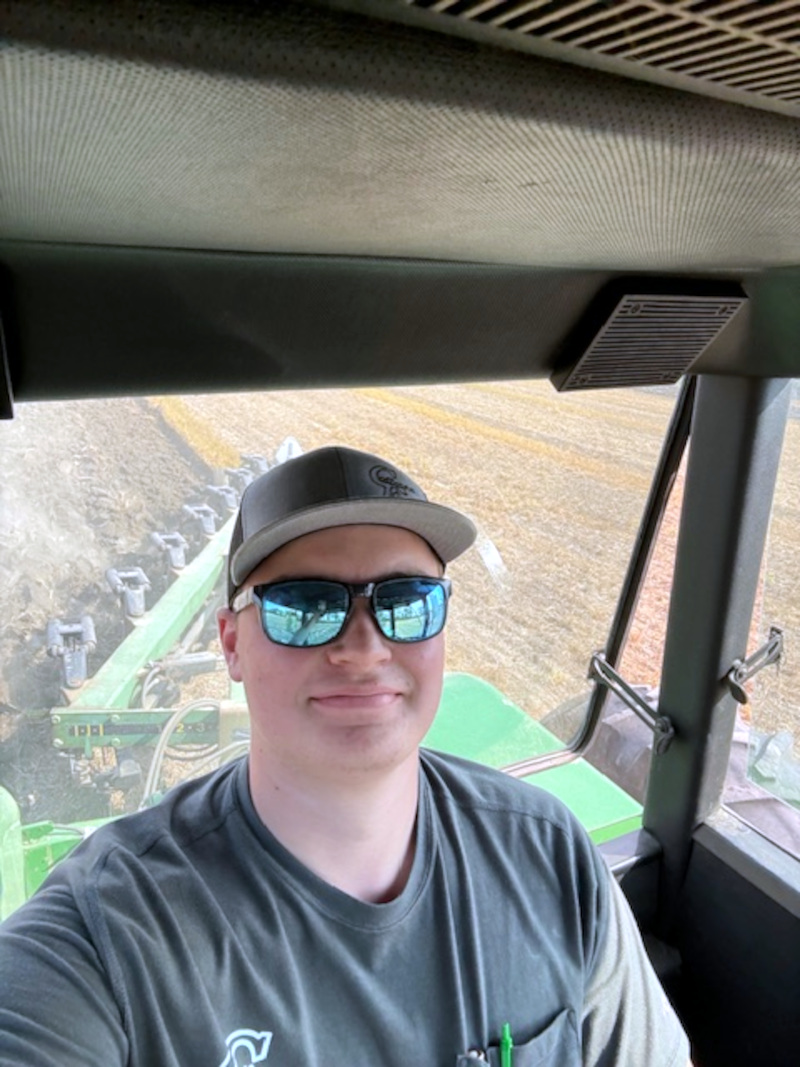
Nash has already gained experience in a shop on different farm equipment and machinery.
He works on the farm after school and sometimes on weekends.
“I have worked on various pieces of machinery like semis, sprayers, tile equipment and even fertilizer drones,” he says.
Drones are some of the latest technological inventions that farmers are using to be more efficient.
“Technology has helped us out the last two decades and has really changed the way of farming as a whole,” Nash says.
On the other hand, there are downsides of technology’s effect on agriculture.
Nash says, “It’s sad to see all the valuable farmland being taken away by solar farms and data centers. I wish there was a different way to use technology besides replacing farmland.”
Over in Dunkirk is 1,700-acre Berry Farms, with sophomore Zane Berry helping his dad and grandpa run the family farm. Their farm specializes in corn and soybeans.
Zane says he hopes to take over the farm one day to work full time.
The challenge he sees himself facing the most is the cost of farming and the inconsistent cash flow.
“I want to be successful and make a lot of money, but as a crop farmer, your paycheck is usually only once a year when you sell your crops,” Zane says.
Similarly Nash sees a challenge being the cost of production to farm and trying to make profit.
“Land, fuel, equipment and repair costs are all big factors that cut money away from the farm’s overall profit,” he says.
Coffman Farms and Berry Farms have something in common. Both farms have invested in advanced technology.
“Technology has made farming much more simple and convenient for us,” Zane says.
The Berrys have GPS systems installed in their tractors and combines for more precise field work.
GPS systems in tractors and equipment track field data, crop yields and help maintain consistent measurements in the field.
Zane’s older brother, Logan, is a custom applicator, which is someone who sprays and fertilizes fields for local farmers in the Muncie area.
With agriculture being a field with many different careers and aspects, there are students that want to go beyond just farming.
Freshman Emma Fisher plans to become an agronomist for the Pioneer Seed brand, which is the nation’s number one selling brand of corn and soybeans.
An agronomist is an agriculture scientist who studies plants, soils and crop production to help farmers maximize crop yields.
Emma’s family runs a 2,000-acre family farm. They farm corn and soybeans along with raising livestock such as beef cattle and pigs for 4-H.
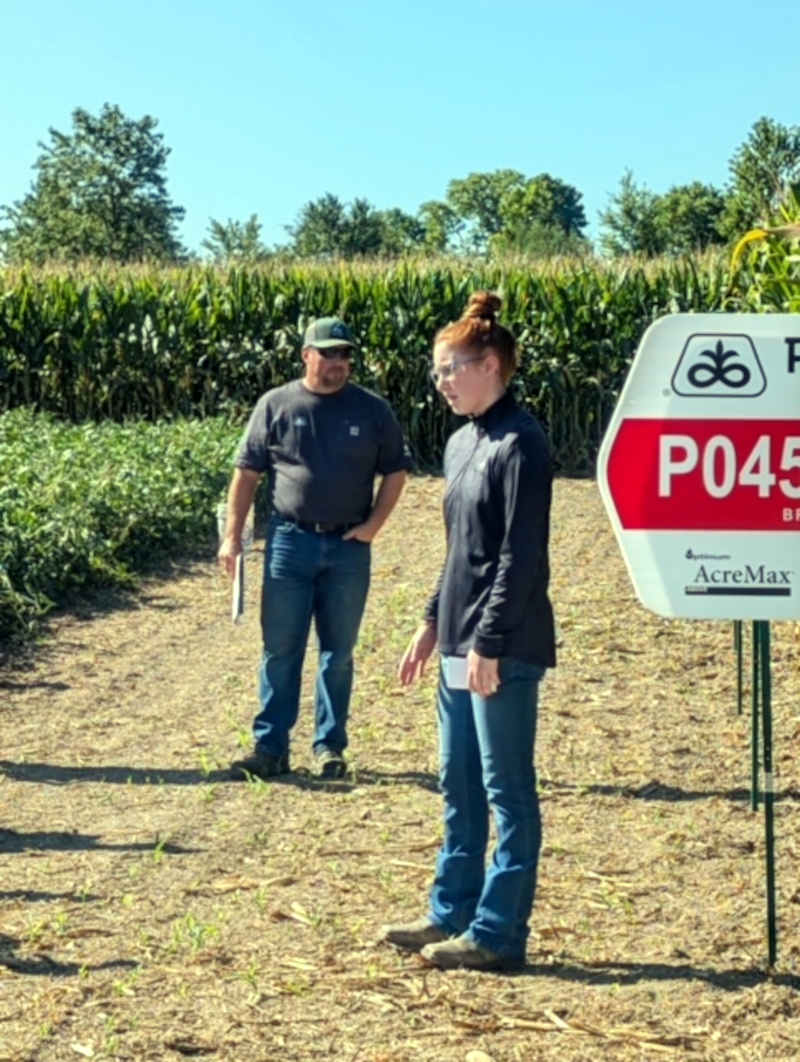
Emma helps her family on the farm with different jobs. She commonly drives a tractor and a grain wagon when fall harvest comes around.
Emma believes that she is an observant person, which can help her be successful as a farmer and especially as an agronomist.
As an agronomist, Emma will learn how plants grow and which chemicals bond to achieve the best yields.
Agronomists have a strong understanding of the diseases that can occur in fields and the different hybrids of seed.
Hybrid seeds are made by cross-breeding two highly stable, distinct parent plants of the same species to combine their best traits.
Emma says she wants to work for the Pioneer Seed brand specifically because that is what her family has always used on their own farm for years.
Mrs. Kunk, the agriculture teacher here at Delta, explains the importance in young students pursuing Ag-related careers.
She says, “Many young people become interested in farming through family traditions, but with an aging farming population, encouraging the next generation to enter the agricultural industry is more important than ever.”
She adds on to the importance of farmers by saying, “In the United States, a small percentage (1%) of the population produces the food that millions depend on every day.”
This goes to show how essential it is for young people to accept the challenge of being the next generation to take on the challenge of future farming.